Showing all 2 results
-
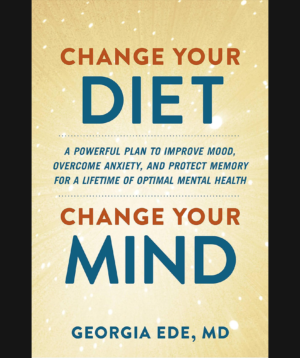
Change Your Diet, Change Your Mind — Georgia Ede
Michelle’s Review:
Mental health has a metabolic component that many don’t talk about. Dr Georgia Ede steps into this space and asks us to look deeper at why mental health deteriorates. Her research shows that if you stabilise glucose and insulin → you stabilise brain energy → you get a calmer mood and clearer thinking. She recommends using nutrition as the first lever.
So, before we prescribe clinical meds, consider changing the diet and observe what the body and mind reveal: fast feedback with the big advantage of low risk. By giving people agency over their own health, they learn their triggers (sugar spikes, seed oils, certain plant compounds) and their supports (proteins, natural fats, minerals) for better mental—and physical—health. She advocates protein first for amino acids and neurotransmitter precursors, adequate natural fats for satiety and stable fuel, and lower carbs to reduce volatility, with ketones as a clean backup.Ultra-processed foods = noisy brain.Nutrient-dense, simple meals = quiet signal. When the brain isn’t firefighting blood-sugar swings, mood evens out.
I found the book to be a fascinating insight into diet and its role in mental health.
-
Toxic Superfoods — Sally K. Norton
Michelle’s Review:
Norton argues that many trendy “superfoods” (such as spinach, almonds, sweet potatoes, beet greens, cacao) are very high in oxalates, natural plant compounds that can accumulate and trigger issues like kidney stones, joint pain, fatigue, gut and skin problems, and brain fog. She explains how oxalates are absorbed, how crystals can lodge in tissues, why symptoms are often missed, and why going low-oxalate too fast can backfire (“oxalate dumping”). The practical core of the book is a step-by-step plan: gradually reduce high-oxalate foods, use cooking and soaking to lower oxalate load, pair calcium-rich foods with oxalate-containing meals, hydrate, and avoid large vitamin C doses that can raise oxalate. You also get charts of foods to
limit or swap, plus guidance to track symptoms and progress. Overall, it’s a cautionary, protocol-driven guide for people who suspect oxalates are a hidden driver of their health complaints.This is, in my opinion, a very worth read as it perhaps explains a lot of symptoms we are getting, as a result of high plant-chemical foods in our modern diet.